
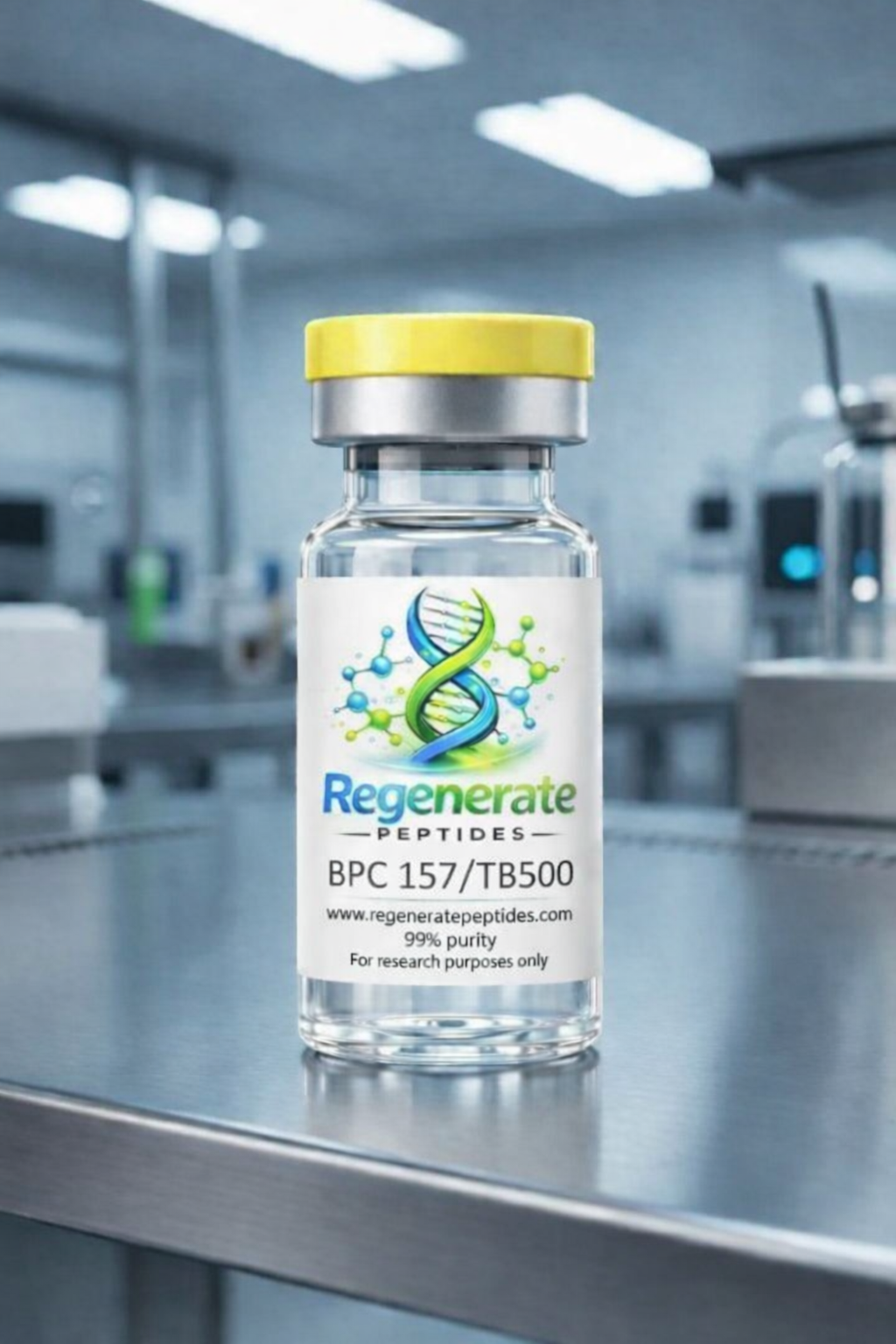
BPC 157/TB500

from $50.00

BPC-157 (Body Protection Compound-157)

Derived from a gastric protein fragment, BPC-157 is researched for its involvement in:

  • Cellular repair signaling

  • Angiogenesis (new blood vessel formation)

  • Gut lining integrity

  • Tendon and ligament models

  • Inflammatory modulation

It is often explored for localized tissue recovery pathways.

TB-500 (Thymosin Beta-4 Fragment)

TB-500 is a synthetic version of a naturally occurring peptide involved in:

  • Actin regulation (cell movement)

  • Tissue regeneration signaling

  • Inflammation response pathways

  • Muscle and connective tissue research

TB-500 is typically studied for its systemic regenerative signaling properties.

Size:

BPC-157 (Body Protection Compound-157)

Derived from a gastric protein fragment, BPC-157 is researched for its involvement in:

  • Cellular repair signaling

  • Angiogenesis (new blood vessel formation)

  • Gut lining integrity

  • Tendon and ligament models

  • Inflammatory modulation

It is often explored for localized tissue recovery pathways.

TB-500 (Thymosin Beta-4 Fragment)

TB-500 is a synthetic version of a naturally occurring peptide involved in:

  • Actin regulation (cell movement)

  • Tissue regeneration signaling

  • Inflammation response pathways

  • Muscle and connective tissue research

TB-500 is typically studied for its systemic regenerative signaling properties.

🧪 Why Researchers Combine Them

In preclinical research, BPC-157 and TB-500 are frequently paired because:

  • BPC-157 targets localized repair mechanisms

  • TB-500 supports broader cellular migration and regeneration pathways

Together, they’re investigated for potential synergistic effects in musculoskeletal and soft-tissue models.